Choose with evidence
Compare tools against your students, data policy, Cantonese needs, curriculum and total cost.
Founded by an education professional in Hong Kong
Criteva works with primary and secondary schools delivering the EDB's AI for Empowering Learning and Teaching Funding Programme. We help the school choose AI tools that fit, prepare teachers for the lessons they will teach, and organise the evidence the 2027 and 2028 reports require. We also build our own classroom platform, iClass.
Founder David Leung answers every enquiry personally, usually within one working day.

Circular 221/2025 sets out what each funded school has to show in the September 2027 mid-term report and the September 2028 final report.
Criteva works with schools that already hold the grant, through to the end of the 2027/28 school year. The EDB application window closed on 28 February 2026.
Read EDB Circular 221/2025An AI subscription on its own produces no open lessons, teaching examples or report evidence. A school needs a plan that fits its subjects, timetable, staff confidence and reporting duties.
Compare tools against your students, data policy, Cantonese needs, curriculum and total cost.
Turn AI into six or more usable resources across at least three subject areas and two year levels.
Run practical workshops around the lessons your staff will teach, with clear boundaries and fallback plans.
Support demonstration lessons, gather classroom evidence and improve the workflow while teachers are using it.
Organise adoption, lesson evidence, student work and evaluation data for the required school reports.
Method
Our four pillars are the ones Stanislas Dehaene sets out in How We Learn. Each one is translated into a classroom decision.
Students learn what they attend to. Interfaces and lessons should make the next useful action obvious.
Focused prompts, calm screens, one decision at a time.Learning grows when students retrieve, explain, speak, write and make choices.
Students produce work instead of reading an AI answer.Mistakes teach when feedback arrives quickly, names the issue and shows what to try next.
Immediate feedback tied to teacher-approved criteria.Spacing, review and sleep move fragile knowledge into memory.
Review cycles that return at the right time.Founder David Leung has taught programming and English in Hong Kong schools and tutoring centres. He answers each school enquiry himself, so the person discussing your implementation is the same person responsible for scoping it.
David holds a Master of Engineering in Technology Entrepreneurship from the Technical University of Denmark. His ventures received support from Danish startup and education organisations.
We also worked with Monika Walczak, Assistant Professor of Psychology at the University of Copenhagen, to better understand AI, trust and user psychology.
Support across our founder's ventures
School names describe prior teaching experience and do not imply institutional endorsement.
Criteva is one part of a broader education practice covering early language learning, classroom culture, AI literacy and teacher workload.
AI classroom workspace
One shared classroom workspace for the whole school. Teachers run daily lessons with quiet AI support while the required records are organised along the way.
Visit project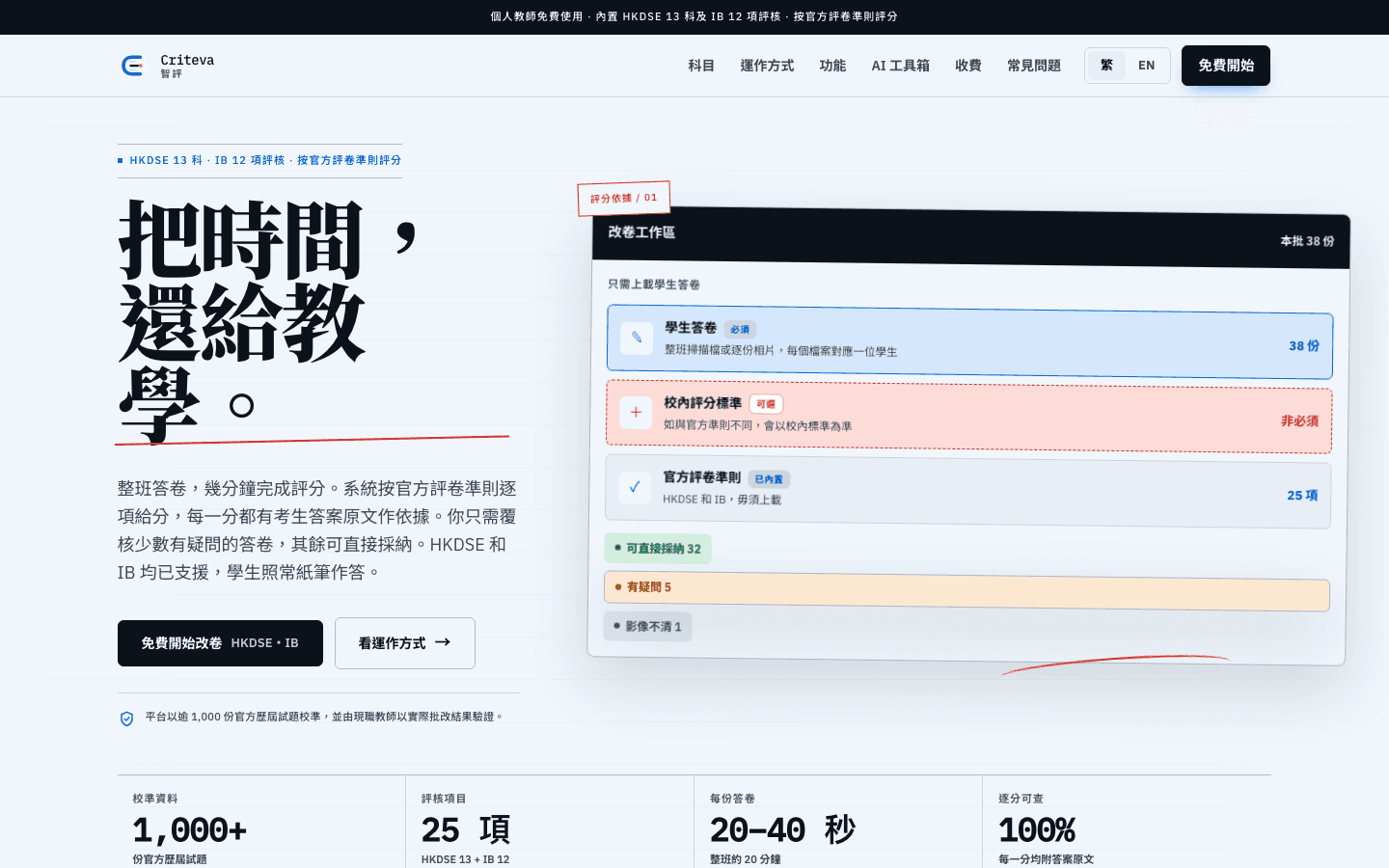
Teacher marking platform
A marking platform for HKDSE and IB work, with official criteria, evidence-linked scoring and teacher review.
Visit project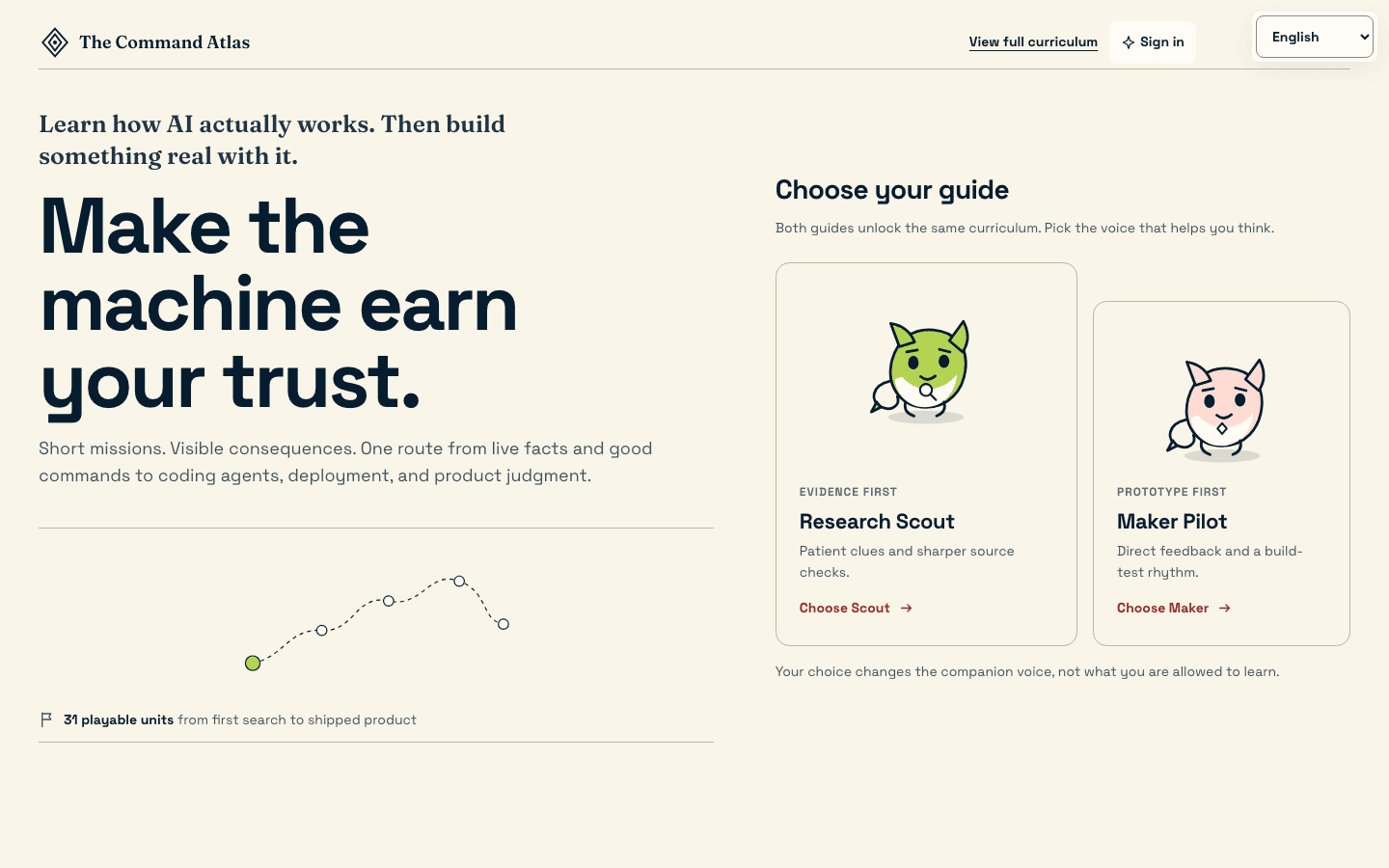
Game-based AI literacy
A game learning experience where secondary students learn, verify, create and build with large language models.
Visit project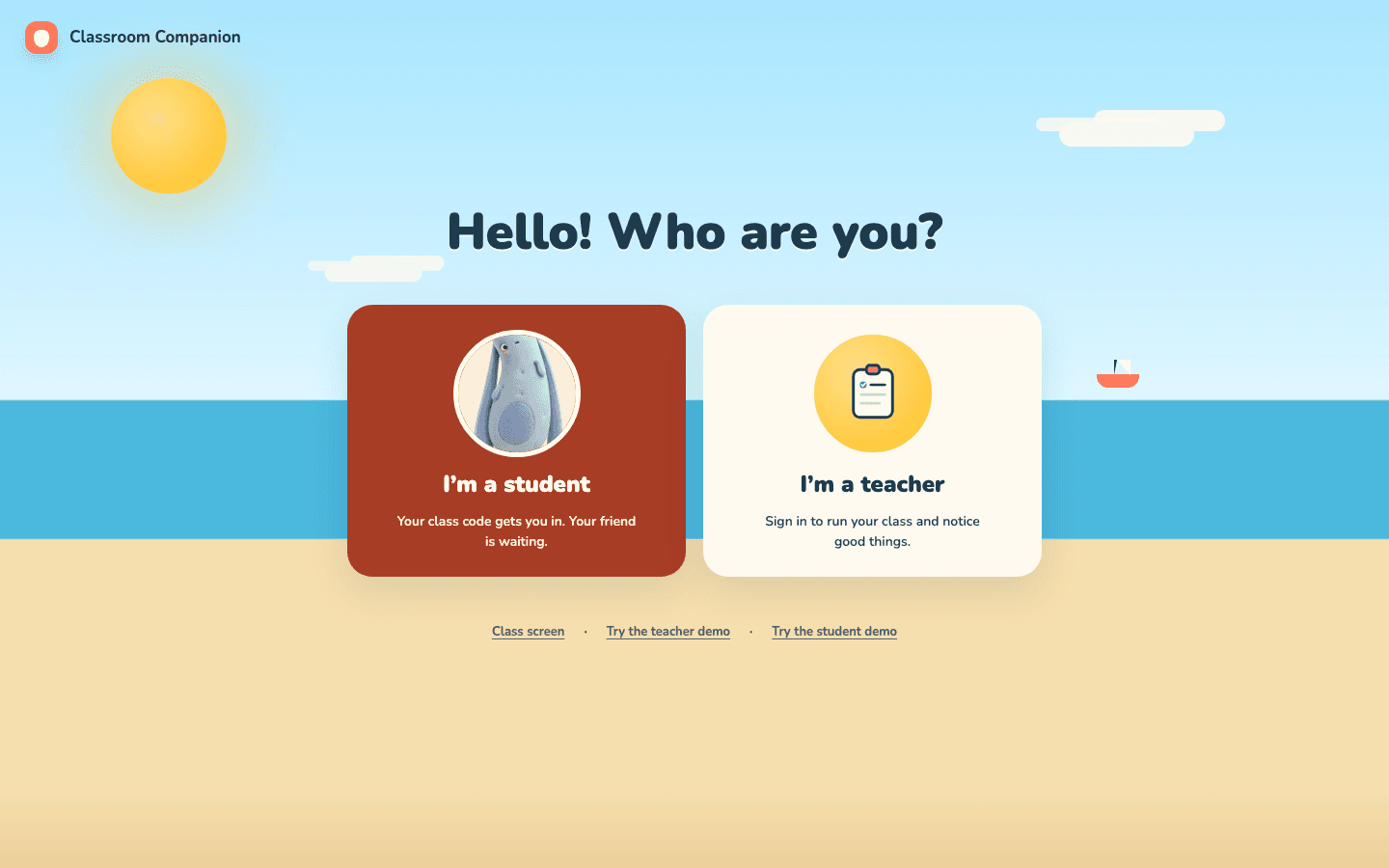
Class management
A calm class management system that helps teachers notice good behaviour. Every student has their own companion in the system.
Visit project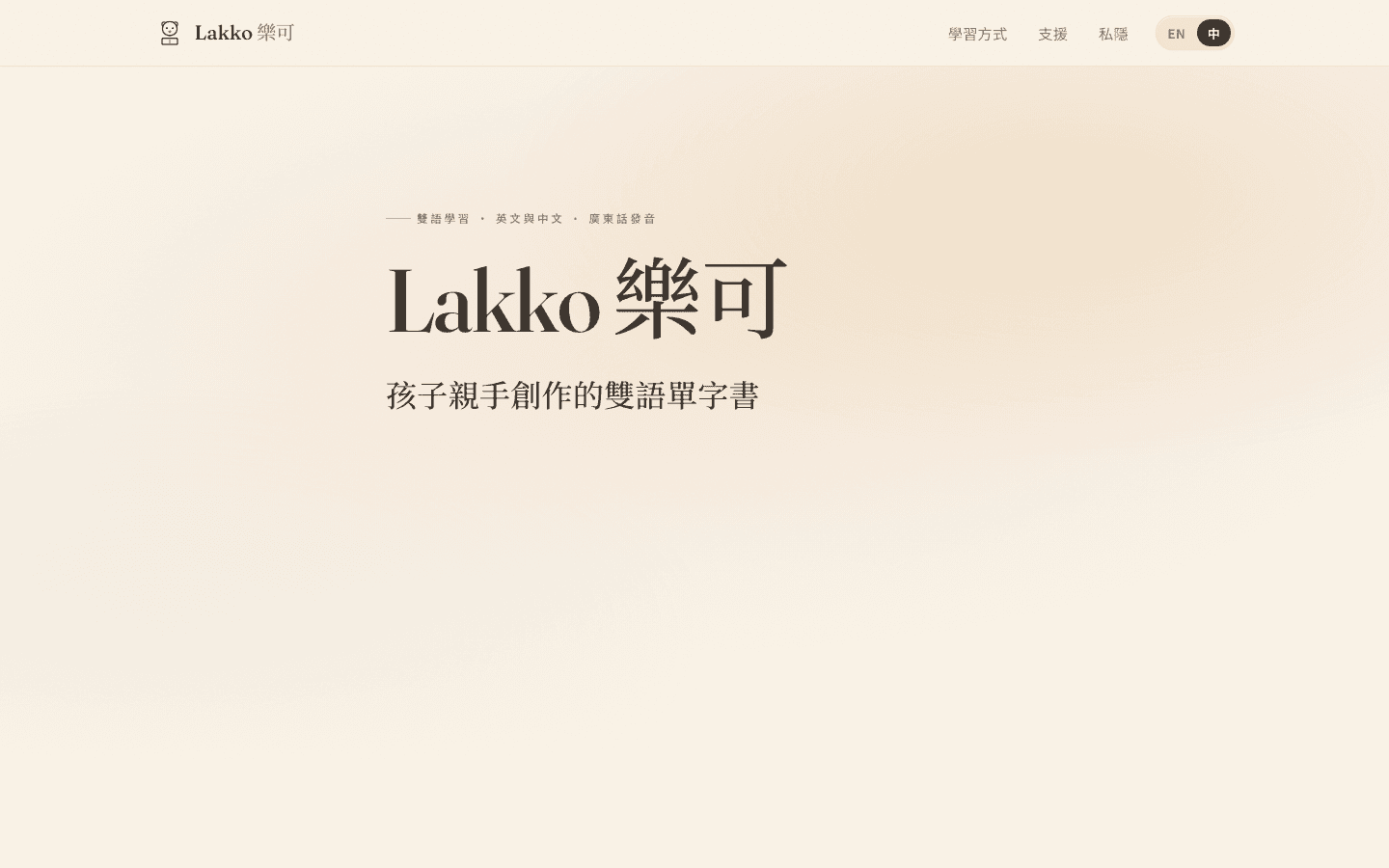
Bilingual language learning
A bilingual English and Cantonese vocabulary app where children look, draw, speak and connect words into their own book.
Visit projectAnswers grounded in EDB Circular Memorandum 221/2025 and the EDB's official updates.
A three-year EDB funding programme launched on 16 December 2025, drawing about HK$500 million from the HK$2 billion the Quality Education Fund earmarked for digital education. Each successful publicly funded primary or secondary school receives a one-off HK$500,000, usable until 31 August 2028. The goal is the EDB's own slogan: AI for ALL subjects.
Yes. Government, aided (including special), caput and Direct Subsidy Scheme primary and secondary schools are all eligible. By early February 2026, more than 790 schools (over 80% of publicly funded schools) had applied, according to the EDB. The commitments are identical for both: AI-assisted teaching in at least three subjects, six teaching examples or resources, open classes, sharing sessions and student activities.
Under the circular, schools may purchase, subscribe to or lease AI software, hardware, platforms, learning and teaching resources and school-based AI application solutions, and subsidise student AI-literacy activities. Criteva helps schools compare the Hong Kong market on curriculum fit, Cantonese support, data policy and total cost, with evidence gathered before any money is committed.
The EDB itself reminds schools to judge carefully whether packaged one-size-fits-all solutions genuinely fit their school. Compare five things: curriculum fit, Cantonese and local-curriculum support, student data privacy, depth of teacher training, and learning-outcome evidence you can put in a report. Criteva scopes each plan from your school's needs, for the subjects and levels you choose.
We help choose tools, design lessons and prepare teachers; build six or more usable resources across at least three subjects and two year levels; support open and demonstration lessons; and organise the evidence schools need for the EDB's mid-term report (September 2027) and final report (September 2028).
We will help you turn it into a practical scope for tools, lessons, teacher preparation and evidence.